THE SHORT VERSION
- Corralejo and Sotavento are different trip bases.
- Sotavento lagoon availability depends on tides.
- Strong wind and rescue arrangements matter more than postcard flat water.
Choose north or south first
Fuerteventura has enough variety that two people can book a kite holiday on the same island and have quite different weeks. One stays around Corralejo and rides northern beaches. The other stays near Costa Calma and follows the wind and lagoon conditions at Sotavento.
Choose the area around the sessions and everyday life you want. Then choose the accommodation. Planning the island as one interchangeable kite spot usually means more transport and less riding than expected.
Compare the two bases
| Corralejo and the north | Costa Calma and Sotavento | |
|---|---|---|
| Trip focus | Town base with several northern riding areas | A stay organized around southern beaches and water-sports centres |
| Conditions to investigate | Waves, rocks and the effect of tide at the chosen beach | Strong/gusty wind, ocean direction and tidal lagoon depth |
| Beginner decision | Confirm the school’s actual teaching location and recovery plan | Confirm lagoon availability and where teaching moves when it is unsuitable |
| Accommodation question | How will you reach the launch each day? | Can you walk to your school, or is a transfer needed? |
| Main planning mistake | Assuming every northern beach is a forgiving sandy launch | Assuming the lagoon is full every day |
ION CLUB’s island overview distinguishes northern spots around Corralejo from Sotavento and Risco del Paso in the south. It is a useful starting map of choices, although its broad suitability language still needs a local conditions assessment.
What to know about the north
Flag Beach is a familiar name around Corralejo, but it should not be reduced to a generic all-level beach. Local operator guidance notes volcanic rocks that become exposed as the water falls. Ask about the current launch and landing zone, tide restrictions and recovery arrangements.
Nearby wave areas introduce further decisions about swell, reef and ability. A short distance between beaches does not make them interchangeable. If you have only just become independent, tell the school that you want help choosing suitable freeride conditions rather than a tour of famous wave spots.
For a mixed group, compare access to shops, restaurants and non-riding activities with the daily journey to the teaching area. Confirm whether the school provides transport and whether the advertised service changes with conditions.
What to know about Sotavento
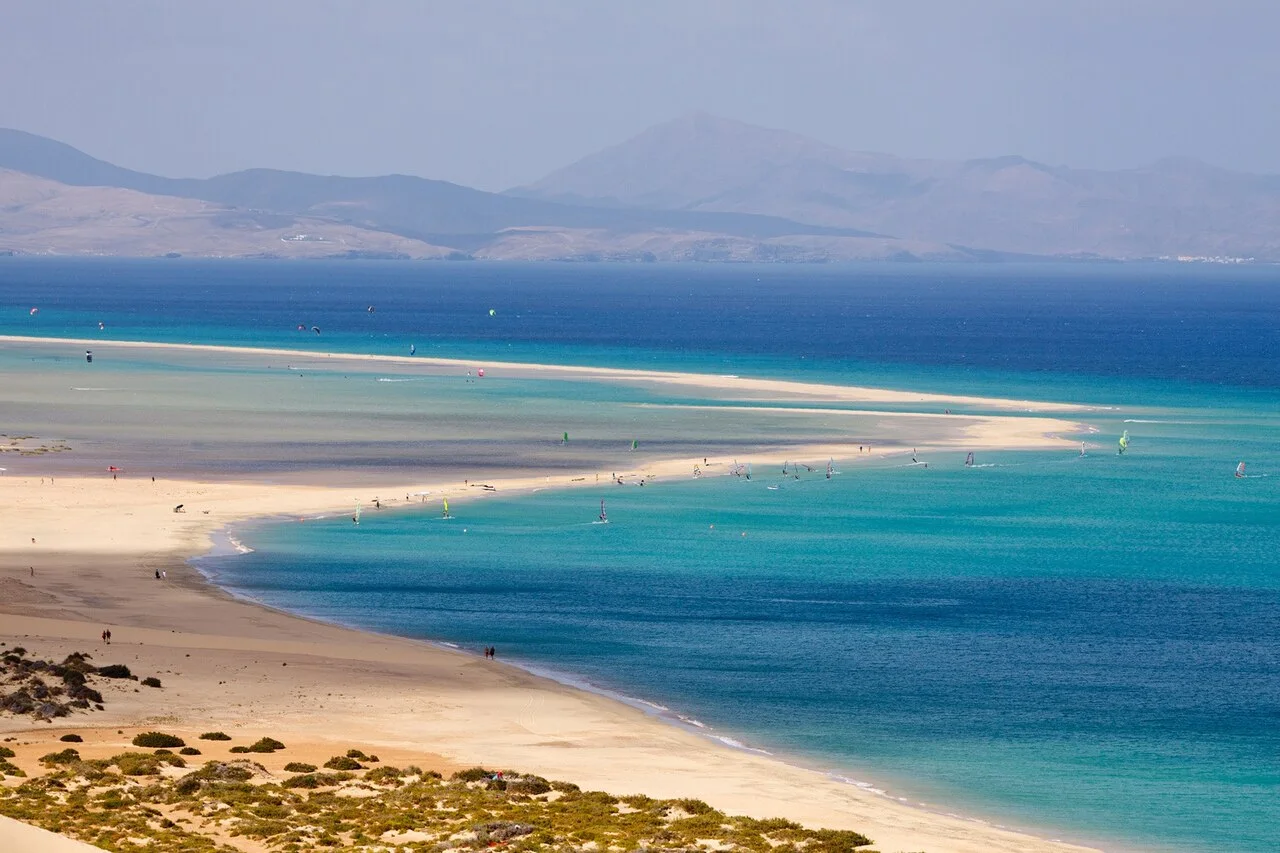
The lagoon is the picture most people recognize. Its usable water depends on tides, and René Egli publishes a dated lagoon timetable. Check your proposed week against that timetable before choosing a trip specifically for lagoon lessons.
The ocean is a different environment. Wind can have an offshore component at this stretch of coast, so beach assistance, supervision and rescue need to be understood before a session. A lagoon booking does not automatically include independent ocean rental or unlimited recovery.
The operator also describes an exclusive licence for teaching in the lagoon. Confirm lesson arrangements with the authorized provider and follow current local zones. Our Sotavento guide goes into the practical questions.
Wind and travel dates
North and northeast trade winds shape much of the island’s kite travel appeal, with summer a common choice for stronger conditions. The wind at a particular beach depends on terrain, direction and weather. Gusts can matter as much as the headline forecast.
Plan for suitable sessions rather than maximum wind. A beginner course can lose time when conditions are too strong. An experienced rider may want exactly those days. Ask the local centre what your chosen month usually means for your level, then check the actual forecast near departure.
Avoid treating online wind-probability percentages as your personal chance of success. Different charts count different thresholds and durations. None knows your ability, equipment or tolerance for rough conditions.
Accommodation, transport and cost
A car may help if you want to explore, but it is not automatically necessary for every beachfront or school package. Compare the total arrangement: accommodation position, included transfers, school transport, storage and who carries equipment.
For rental, check required ability, available sizes and damage liability. For lessons, compare actual kite time, student sharing, instructor language and weather policies. For your own gear, confirm storage and rescue separately. Use current quotes rather than old forum prices.
Pack for wind chill as well as sunshine. Ask your centre about thermal protection for the month and how long you will be in the water. Foot protection may be recommended locally, but it does not remove the need to avoid rocks and unsuitable launches.
Make room for the rest of the island
Keep a day flexible for exploring when conditions do not suit riding. Consider the transport and interests of anyone coming with you. A kite-focused beach can be uncomfortable for someone expecting a sheltered swim and a quiet lunch.
Before booking, compare the north/south choice again with your actual goal. For a concentrated lagoon week, also consider Dakhla. For a different mix of island travel and riding, compare Mauritius.
Research checked on 16 October 2026 using ION CLUB and René Egli. Current beach instructions and local assessment take priority over a general guide.
SOMETHING CHANGED?
Conditions, access and prices change. Follow the source links in the guide for the latest details. If something needs correcting, tell us. Get in touch ↗