THE SHORT VERSION
- Lagoon and ocean sessions need different skills.
- Ask what rescue covers at your exact launch.
- Wind and water levels change through the year.
A trip built around riding
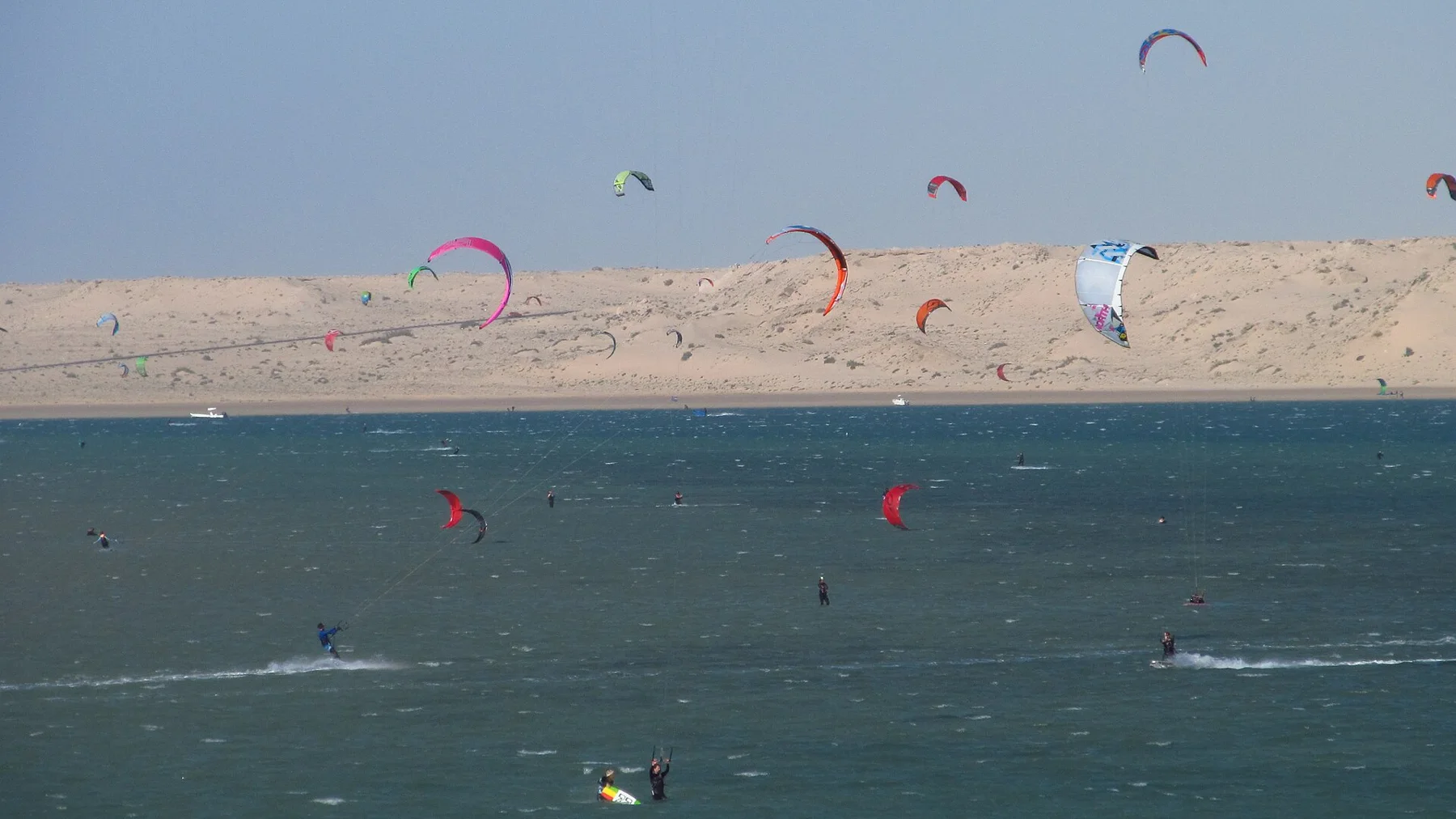
Dakhla is a strong candidate when you want your days to revolve around learning or riding. Lagoon accommodation, schools and equipment services can sit close together, which makes consecutive days on the water practical. The choice of base makes a bigger difference than the word Dakhla on a package.
Dakhla lies on an Atlantic peninsula in Western Sahara, administered by Morocco. The lagoon and the ocean side offer different environments. A beginner course in protected water and a wave session on the Atlantic are separate plans with separate requirements.
Choose your part of the lagoon
Start by asking where you will actually launch. Different bases face different shorelines, and the wind’s angle to land changes with your position. A general description of north or northeast wind is not enough to establish a safe session.
KBC’s local guide describes shallow edges, deeper central water and a waterline that moves with the tide. It also notes shell fragments in parts of the sand. Flat-looking water does not mean the whole lagoon is standing depth or free of obstacles.
| Your goal | Useful base features | Questions to ask |
|---|---|---|
| First lessons | Teaching area close to the centre, suitable equipment and direct instruction | How are students supervised, and where does the course move with the tide? |
| Waterstarts and first runs | Space for recovery and a clear progression plan | Is supervised practice included, and how are downwind riders recovered? |
| Independent freeride | Convenient storage, launch help and documented rescue cover | Which zone is covered, during which hours, and at what cost? |
| Waves or excursions | A guide who assesses local conditions and your experience | What skills, tide and wind are required, and what support is absent? |
Lagoon and ocean are different choices
For most new riders, the lagoon is the starting point to discuss with a school. Even there, your instructor should assess the actual wind, water depth and traffic before a session.
The ocean side introduces swell and different recovery consequences. ION CLUB Lassarga describes an ocean area and a separate lagoon teaching area, with a vehicle transfer between some services. Check that distinction before booking a bungalow expecting beginner lessons directly outside it.
Treat downwinders and named excursions as separate activities. KBC lists specific ability, tide and wind requirements for Speed Spot and White Dune trips, with limits on boat access. Being able to ride across the lagoon does not automatically make an excursion appropriate.
When to go
Local operators work year-round. Commercial guides generally describe spring through autumn as the stronger wind period, with summer often bringing more power. Winter can still provide sessions and a different ocean-wave focus, but a year-round opening date is not a wind guarantee.
Choose a period around the conditions you can handle. Maximum wind is not necessarily helpful for a first course. Ask the school what typically happens during your intended month, how it handles strong days and what cancellation rules apply when conditions are unsuitable.
Use the forecast to plan the next few days, then get a local assessment before riding. Avoid buying a single kite for a trip based only on a monthly average.
Lessons, rental and rescue
A package can include accommodation and food while leaving important services separate. Ask for a written list covering equipment, wetsuit, harness, lesson format, storage, beach assistance and rescue.
Rescue cover deserves its own questions. Does it include you on your own equipment? Which water area is monitored? Are there limits on recoveries or charges? Does it stop at a set time? Does it cover an excursion? Never infer the answers from a boat in a promotional photo.
For a beginner, ask how much of a group lesson is active kite time and how progression is assessed. For an independent rental, ask which skills the centre requires and how it handles unsuitable wind. Our lessons guide explains the comparison.
Plan the practical side
Check whether you want to stay beside your riding area or closer to town. Confirm airport transport, daily transfers and what non-riders can do from the accommodation. Verify current entry requirements and travel advice with the relevant authorities for your nationality and itinerary before paying.
Build the budget from current quotes. Include food outside the package, local transport, baggage, damage liability and any instruction you may want after arrival. Published starting prices do not establish the cost of your exact week.
Pack sun protection, a windproof layer and equipment appropriate to the school advice. Ask about suitable thermal protection rather than assuming desert scenery means warm water. Keep a few flexible hours for walking, town or a guided land excursion when conditions do not suit riding.
Before committing
Send the school your actual level, dates and equipment plan. Ask it to describe the launch, tide changes, teaching arrangements and rescue scope. Compare the answer with Fuerteventura if you want more independent exploration, or Mauritius for a broader island holiday.
Sources checked on 16 October 2026: KBC Dakhla and ION CLUB Lassarga. Both are operators selling services; their descriptions are useful local evidence, not independent guarantees.
SOMETHING CHANGED?
Conditions, access and prices change. Follow the source links in the guide for the latest details. If something needs correcting, tell us. Get in touch ↗