THE SHORT VERSION
- The lagoon and One Eye are different environments.
- Austral winter generally brings stronger trade winds.
- Confirm your riding zone and the limits of rescue cover.
Decide which Le Morne trip you want
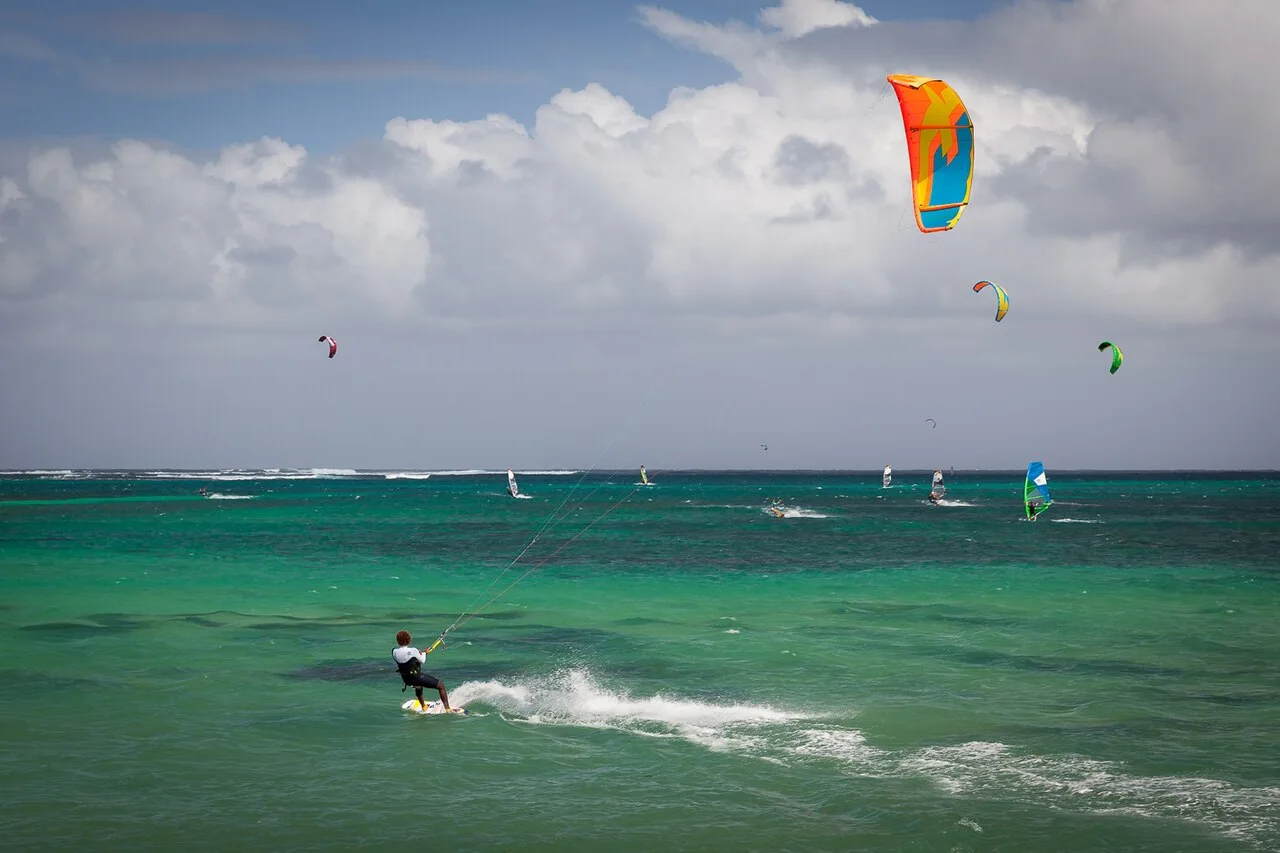
Le Morne can work for a beginner taking lessons, an independent freerider or an experienced wave rider. That does not mean they should ride the same water. The lagoon and the outer reefs need different skills, equipment and decisions.
This distinction should guide the trip from the beginning. Choose the teaching area or riding zone you need, then compare accommodation, transfers and services around it. A hotel photograph with a wave behind it does not tell you where your first lesson happens.
Lagoon and reef are separate environments
| Area | Why riders consider it | What needs checking |
|---|---|---|
| Teaching lagoon | Sheltered water and organized instruction | Depth, traffic, wind direction and supervised area |
| Independent lagoon riding | Freeride and progression | Access, launch zones, upwind ability and recovery |
| Outer reef areas | Wave riding with different breaks | Local briefing, swell, currents, reef depth and return route |
| One Eye | Powerful, fast reef waves | Expert wave-riding competence and a current local assessment |
ION CLUB’s local information identifies One Eye as an expert area. Do not read the short distance on a map as a natural next step after riding the lagoon. Reef contact, deep-water crossings and the consequences of losing equipment change the decision.
Even in the lagoon, shallow water does not cancel the risks of gusts, offshore wind or collisions. Stay within the zone and conditions your instructor has assessed. An online guide cannot decide whether a particular launch works that afternoon.
When to plan a kite trip
The southeast trades are generally stronger during the austral winter. ION describes stronger winter conditions and highlights June to November in its visitor guidance. Other commercial guides use a wider May-to-November window. Those descriptions overlap, but they are not a promise of wind on every day.
| Period | Broad planning context | Your next check |
|---|---|---|
| Middle of the year into austral spring | Often chosen for stronger trade winds | Ask about conditions for your level and watch the actual forecast |
| Austral summer | Generally lighter and potentially wetter | Check current weather, course flexibility and your no-wind plans |
| Any month | Conditions vary between days and riding areas | Get a local briefing before each unfamiliar session |
If the main reason for travel is kiting, leave flexibility in the schedule. If you are planning a broader holiday, make sure you would still enjoy the island during a run of unsuitable riding days.
Choose the school and service location
ION lists several service locations around Le Morne, including the Kite Lagoon, La Pointe and hotel-related boat services. They are different meeting points and products. Ask which one applies to your booking.
For a first course, compare instructor language, student-to-kite arrangement, water time and the school’s weather policy. Explain any previous lessons through skills you can actually perform. Saying that you have completed a course does not tell a new instructor whether you can relaunch or return upwind.
For rental or your own equipment, confirm whether rescue covers your riding area and equipment, when it operates and what it excludes. Ask specifically about reef areas. A general description of boat safety is not permission to ride wherever you want.
Beachfront or an inland base
A beachfront stay can reduce equipment transport and make a split day with family easier. Confirm where the school meets and whether the beach directly outside is suitable for your activity.
La Gaulette is another area visitors consider for accommodation and services. Compare the practical travel to your launch, parking, equipment storage and whether you need a vehicle. Check school shuttles directly: some are restricted to particular guests or hotels.
A cheaper room can become less attractive once you add transport and daily inconvenience. Equally, a resort package is not automatically better if its services do not match the riding you want.
Budget and packing
Get current quotes for accommodation, food, transfers, lessons or rental, storage and rescue. Check equipment damage terms before using rental gear. Read airline baggage conditions for the actual ticket and route rather than assuming all kite bags travel under the same rule.
Ask the centre about thermal protection for your dates. Sun, wind, time immersed and personal tolerance all matter. There is no single kite size or wetsuit recommendation that fits every rider and season.
Keep reef and beach care practical: avoid contact with coral, follow marked zones, keep lines clear of other users and ask about local launch etiquette. Respect fishing and other beach activities. Take the local briefing seriously even if you have ridden a similar-looking lagoon elsewhere.
A useful booking message
Send your dates, weight, current skills, equipment plan and the kind of holiday you want. Ask for the teaching/riding location, transport options, rescue limits and weather cancellation terms. Compare the answer with Dakhla if daily riding is the main priority.
Sources checked on 16 October 2026: ION CLUB Le Morne and Duotone Pro Center’s Le Morne information. These are local commercial descriptions, not a current conditions report.
SOMETHING CHANGED?
Conditions, access and prices change. Follow the source links in the guide for the latest details. If something needs correcting, tell us. Get in touch ↗