THE SHORT VERSION
- Flat water is a surface description, not a safety rating.
- Tide, depth and bottom need separate evidence.
- The right flat-water area depends on your discipline and skill.
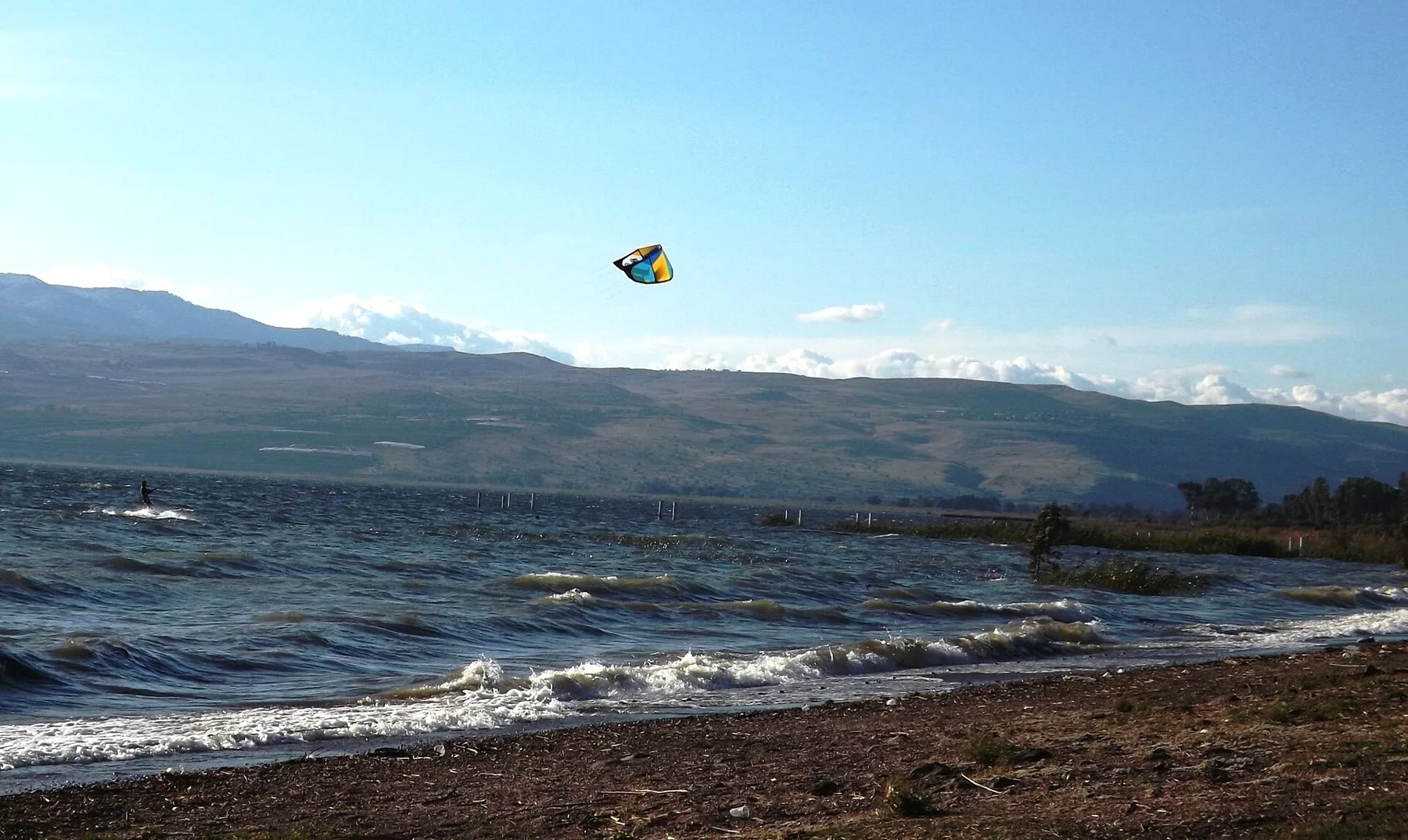
Flat water is attractive for good reasons. It can remove some of the interruption of chop and make it easier to focus on board control, turns or a specific progression goal. The mistake is to let the smooth surface stand in for the whole assessment.
A sheltered lagoon can still have an unsuitable wind angle, a hard or shallow bottom, crowding, restricted access or no organised recovery. Choose the complete environment, not just the photograph.
Match flat water to your purpose
| Session | What matters beyond the surface |
|---|---|
| First lessons | An appropriate teaching area, instructor supervision and recovery |
| Controlled freeride | Room, exits, wind quality and the ability to maintain your chosen area |
| Freestyle practice | Space between users, suitable depth and consequences of failed attempts |
| Kitefoiling | Sufficient assessed clearance throughout the route, including entry and exit |
| Racing | A suitable course area, local permissions and event or training organisation |
A place that works well for a twintip lesson may not have the clearance a foil needs. A spot popular with experienced freestyle riders may be crowded and poorly suited to a newly independent visitor. Keep those differences visible when reading recommendations.
Three useful comparisons
Dakhla’s lagoon is not uniformly standing depth. KBC’s destination information distinguishes ordinary centre services and excursions, while changing waterline and deeper central areas matter to the plan. Choose the base and support package, not merely “Dakhla flat water.”
At Sotavento, the lagoon timetable is central. A good wind season cannot create the lagoon on dates when the required tide is absent. Confirm the teaching arrangement and any ocean alternative separately.
At Le Morne, ION’s centre page distinguishes service locations and the wider reef environment. A learning lagoon and expert reef waves should not share a single suitability label simply because they appear in one destination guide.
Sheltered does not mean supervised
The Rivedoux tourism record describes a partly designated kite area and an unsupervised beach. This is a useful reminder that calm-looking water, zoning and support are separate facts.
A designated area does not promise rescue. A school operating nearby may support only its own students. Ask who will respond to the problem you are planning for, where their service applies and whether they are operating during your session.
New Caledonia’s tourism overview also distinguishes sheltered settings, reef-wave locations and water-taxi access. Transport can be part of the riding problem: if you need a boat to get there, establish how you return when conditions or your energy change.
Read the bottom and the wind as separate questions
“Shallow” needs context. How does depth change with tide or water level? What is the bottom made of? Where are obstacles or deeper transitions? Do not infer permanent waist depth from a wide-angle image or a person standing near shore.
Likewise, water can be smooth because wind blows away from the shore. The resulting drift problem may be serious. The absence of chop does not establish a forgiving recovery situation.
For an unfamiliar place, get a briefing on the usable area, exits, changing conditions and other users before rigging. A locally appropriate assessment should account for your ability and equipment. This article does not supply a universal safe depth, wind range or permission boundary.
Choose a trip with room to change plans
If flat water is the main purpose, ask a provider how often it can actually deliver the intended environment during your dates and what happens when it cannot. Compare lessons, supervision, rental and excursions as separate products.
For a short stay, one suitable supported base may provide better value than moving between several famous lagoons. For a mixed holiday, keep enough off-water options that a tide or weather decision does not ruin the day for everyone.
Respect restricted sandbanks, protected habitat and shared-use zones. Smooth water inside a sensitive area is not an invitation to find an unofficial access route. Use the destination guides to choose a base and access guidance to check the actual local decision.
SOMETHING CHANGED?
Conditions, access and prices change. If something needs updating or correcting, tell us. Get in touch ↗