THE SHORT VERSION
- Won King of the Air in 2013 and 2020.
- Historical achievements are dated, not presented as a current ranking.
- Competition footage is inspiration, not a progression plan.
Why start with Jesse
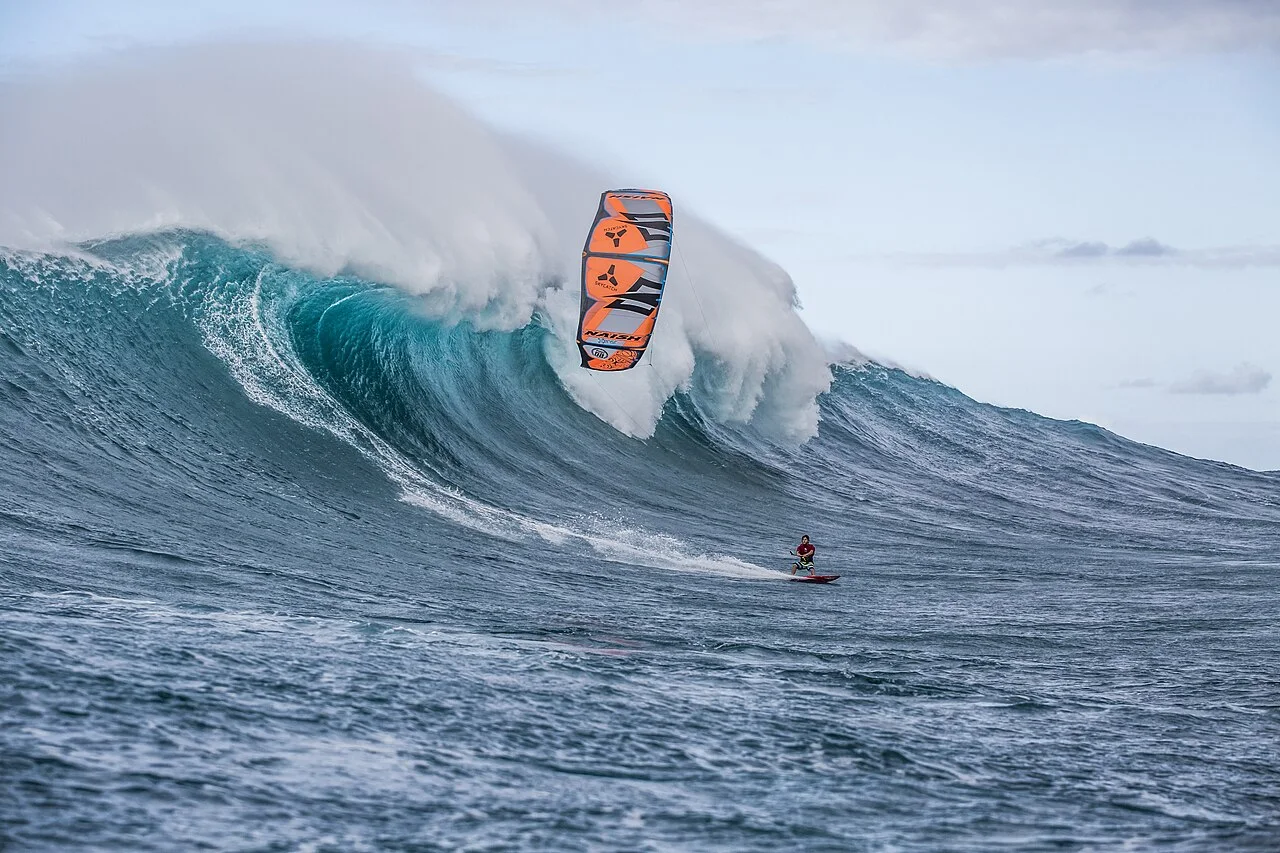
Jesse Richman is a useful rider to know if you want to understand how modern big air developed. He grew up on Maui, with a background in ocean sports, and won Red Bull King of the Air in both 2013 and 2020.
Those two wins give the profile a clear starting point. They connect the event’s return to Cape Town with a later era of bigger and more technical competitive riding. You can watch the footage, see the result and understand why the name keeps appearing in the sport’s history.
The achievements to know
| Year | Achievement | Evidence |
|---|---|---|
| 2013 | Won Red Bull King of the Air at Big Bay, Cape Town | Naish’s contemporary report |
| 2020 | Won Red Bull King of the Air at Kite Beach, Cape Town | Red Bull’s contemporary report |
These are dated historical results. They do not imply that he leads a current ranking or holds every title associated with big air.
The 2013 return to Cape Town
King of the Air began in Hawaii in 2000. After a period away, it returned in Cape Town in 2013. Richman won that edition at Big Bay.
Naish’s February 2013 report describes a contest built around strong wind, waves as takeoff ramps and a format intended to give the riders room for big performances. The judging language included height, creativity and style. Read that as a description of that edition: current event rules should not be projected back onto an older result.
The report is also a useful example of source context. Naish was writing about a rider associated with the brand at the time. It is direct contemporary evidence for the result, but it is not a current sponsorship record or an independent equipment review.
The 2020 win
Red Bull’s 2020 report documents Richman’s second win, this time at Kite Beach. Watch SurferToday’s event highlights as a competition rather than only a collection of spectacular jumps.
Pay attention to how a rider builds a heat. Individual attempts need to become a score that holds up against opponents. The time limit, available conditions and execution all matter. A big moment is memorable, but the result comes from the format being contested.
The seven-year gap between Richman’s two wins also gives you a way to compare eras. Look at the trick choices, takeoffs and landings, and then read the explanation of the relevant rules. Equipment and competition formats change together, so a straight numerical comparison across years can be misleading.
Maui and ocean riding
Red Bull’s historical material and a 2019 North team announcement carried by The Kite Mag describe Richman’s Maui upbringing and involvement in surfing, windsurfing and kiteboarding.
That broader ocean background is relevant when watching his riding. A competition result tells you what happened within an event. Ocean footage can show a different part of an athlete’s work, with wave judgement and local knowledge taking more of the frame.
It should not be read as a ready-made progression pathway. Big-wave riding and extreme-air projects involve risks and preparation that a short video cannot explain. Enjoy the footage without assuming that the visible move is the only skill involved.
What to watch for
Start with the 2020 event highlights, then compare them with the 2013 event history. Watch the approach and exit as well as the time in the air. Notice whether a rider lands with speed and control, and how another attempt follows.
When the commentary mentions difficulty or innovation, pause long enough to understand the trick being discussed. For a new viewer, recognizing the difference between a spectacular attempt and a completed scoring performance makes a full heat much more interesting.
Read our King of the Air guide alongside the footage. It explains the modern event and where to find current format information.
Keep equipment and records in perspective
Older profiles contain old sponsors, old equipment and record claims with different definitions. A tow-assisted height, a competition jump and a season title are not interchangeable achievements. This profile does not combine them into one total.
For current equipment or team information, check a dated athlete or brand announcement. For your own equipment decisions, use your level and local conditions as the starting point in our gear guide.
Continue through the rider selection to explore freestyle, waves and racing, or use the competition overview to understand how those disciplines differ.
Research checked on 16 October 2026. Core sources: Naish’s 2013 result, Red Bull’s event history and Red Bull’s 2020 result.
SOMETHING CHANGED?
Conditions, access and prices change. Follow the source links in the guide for the latest details. If something needs correcting, tell us. Get in touch ↗