THE SHORT VERSION
- Choose snowkite instruction and an authorized teaching area
- Treat ice, weather and mountain terrain as separate hazards
- Use the exact kite and control-system instructions
Snow changes the riding
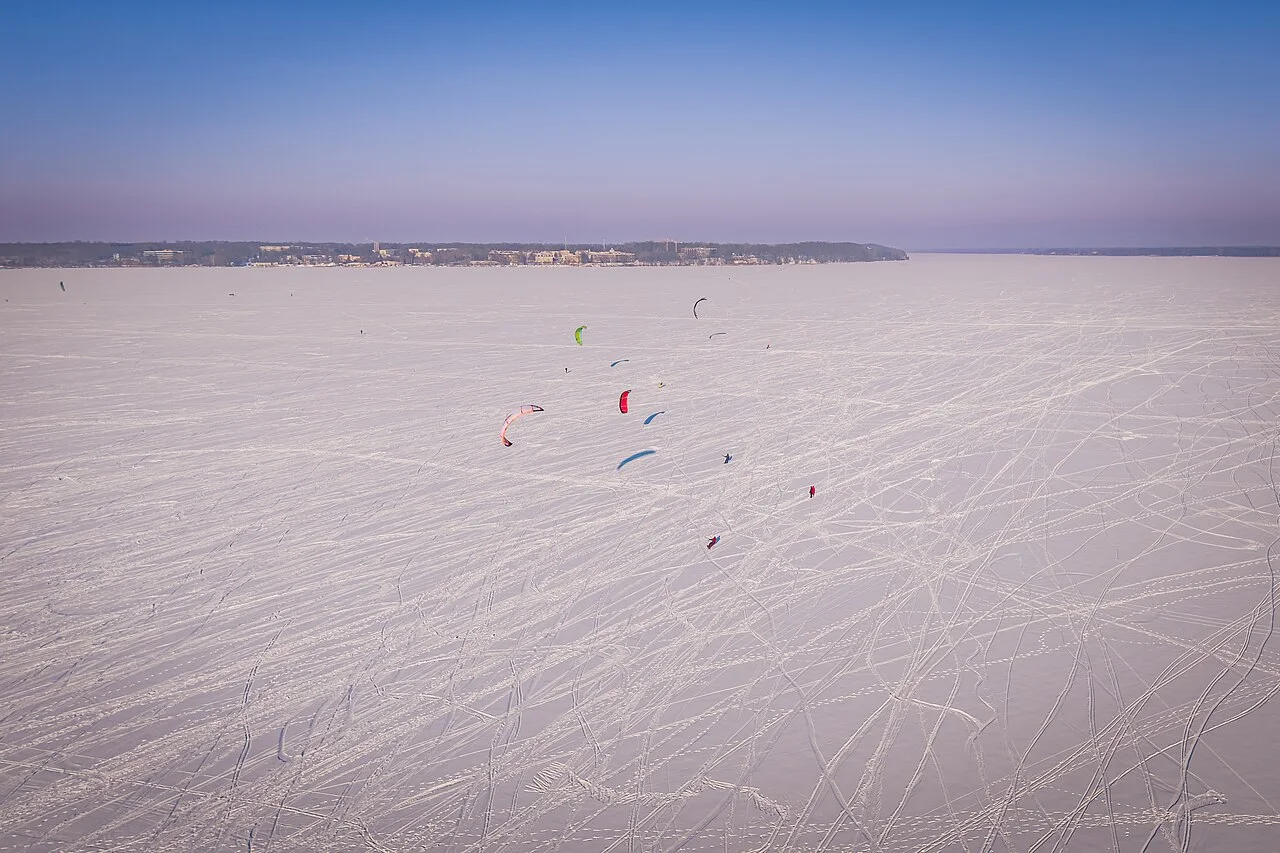
Snowkiting uses a traction kite to move across snow with skis or a snowboard. It can happen on relatively flat teaching terrain or in much more complex mountain environments. Those are very different outings.
The first useful decision is where and with whom to learn. Find snowkite instruction for an authorized area, and ask the provider what skills and conditions that particular setting requires.
A water rider brings useful kite awareness. A skier or snowboarder brings useful sliding skills. Neither automatically brings the other half, or the judgement needed for mountains and ice.
Choose an introductory setting
A photograph of open snow does not show everything underneath or around it. Rocks, fences, roads, holes, trees, infrastructure and terrain changes can all affect the working area. Wind also interacts with relief and obstacles.
Ask the instructor where the lesson will take place, how the area is assessed and what makes it unsuitable. Find out about land access, restrictions, other users and how you return if the wind stops.
A frozen lake needs a current local assessment and authorized access. Appearance is not evidence of load-bearing capacity. This guide cannot clear ice for use or provide a universal thickness rule.
Do you need to ski or snowboard already?
Ask about the actual lesson. Stoke Riders’ West Michigan introduction describes beginner provision on flatter terrain, including people without previous snow-sport experience. Zephyr’s mountain-focused guidance expects stronger snow skills and discusses backcountry competence.
Those are different contexts. Someone learning basic traction in a managed area is not preparing for the same outing as a rider touring mountain terrain with a pack.
Tell the school honestly about your kite experience and snow skills. Let it assess the right starting point. Do not use a provider’s estimated learning hours as a promise about your readiness.
Understand the equipment categories
| Equipment | What needs checking |
|---|---|
| Skis or snowboard and boots | Fit, condition and suitability for the teaching setup |
| Kite | Intended surface, learner suitability and exact model instructions |
| Bar and control system | Approved compatibility and operation with gloves and cold conditions |
| Harness | Fit with winter clothing and manufacturer-approved use |
| Clothing and protection | Warmth, dexterity, visibility and the provider’s equipment requirements |
| Additional local equipment | Communication, navigation or terrain-specific requirements determined with qualified guidance |
Foil and inflatable kites have different designs and behaviors. An open-cell snowkite, a closed-cell water-oriented foil and an inflatable kite are not automatically interchangeable. Use the instructor’s selection and the exact manufacturer’s guidance.
For example, Ozone describes its EXP as expert and expedition equipment. Its release arrangement and compatible control systems are specific to the model. An impressive product feature does not make expedition terrain suitable for a beginner.
Keep the skis on the snow
Ozone explicitly warns that its snowkites are not for flying or soaring and its harnesses are not designed for flight. That distinction deserves attention when mountain videos make leaving the ground look casual.
This introduction does not teach jumps, self-launching or release procedures. Learn equipment operation practically with someone qualified. A water setup you know well may behave differently on snow, and cold can change dexterity and how components are handled.
Do not improvise an anchor or launch method from a short online description. Your first lesson should establish appropriate procedures for the actual terrain and equipment.
Mountain touring needs more than kite control
Backcountry terrain adds navigation, changing visibility, avalanche exposure where present, remote rescue and rapidly changing weather. The route back matters as much as the ride out.
Use qualified local guidance and the training needed for the terrain. Carrying rescue equipment is not a substitute for knowing how to assess and use it. A managed lesson does not qualify someone for an independent mountain trip.
Likewise, a good sea-weather routine does not cover every winter risk. The RNLI’s kitesurfing guidance offers useful planning habits for water riding, but it is not a mountain or ice assessment.
Questions for the first lesson
- What snow and kite skills do you require for this location?
- Is the teaching area authorized, and how is it assessed on the day?
- What equipment is provided, and what must I bring?
- How are cold, visibility and changing wind handled?
- What happens if conditions prevent the lesson?
- What is the emergency and return plan for this specific area?
- Which skills should I be able to demonstrate afterward, and what still requires supervision?
Get those answers before buying winter equipment or planning a remote trip. If you also want to learn on water, the beginner pathway explains the additional water skills, including relaunch, body dragging and board recovery.
SOMETHING CHANGED?
Conditions, access and prices change. Follow the source links in the guide for the latest details. If something needs correcting, tell us. Get in touch ↗