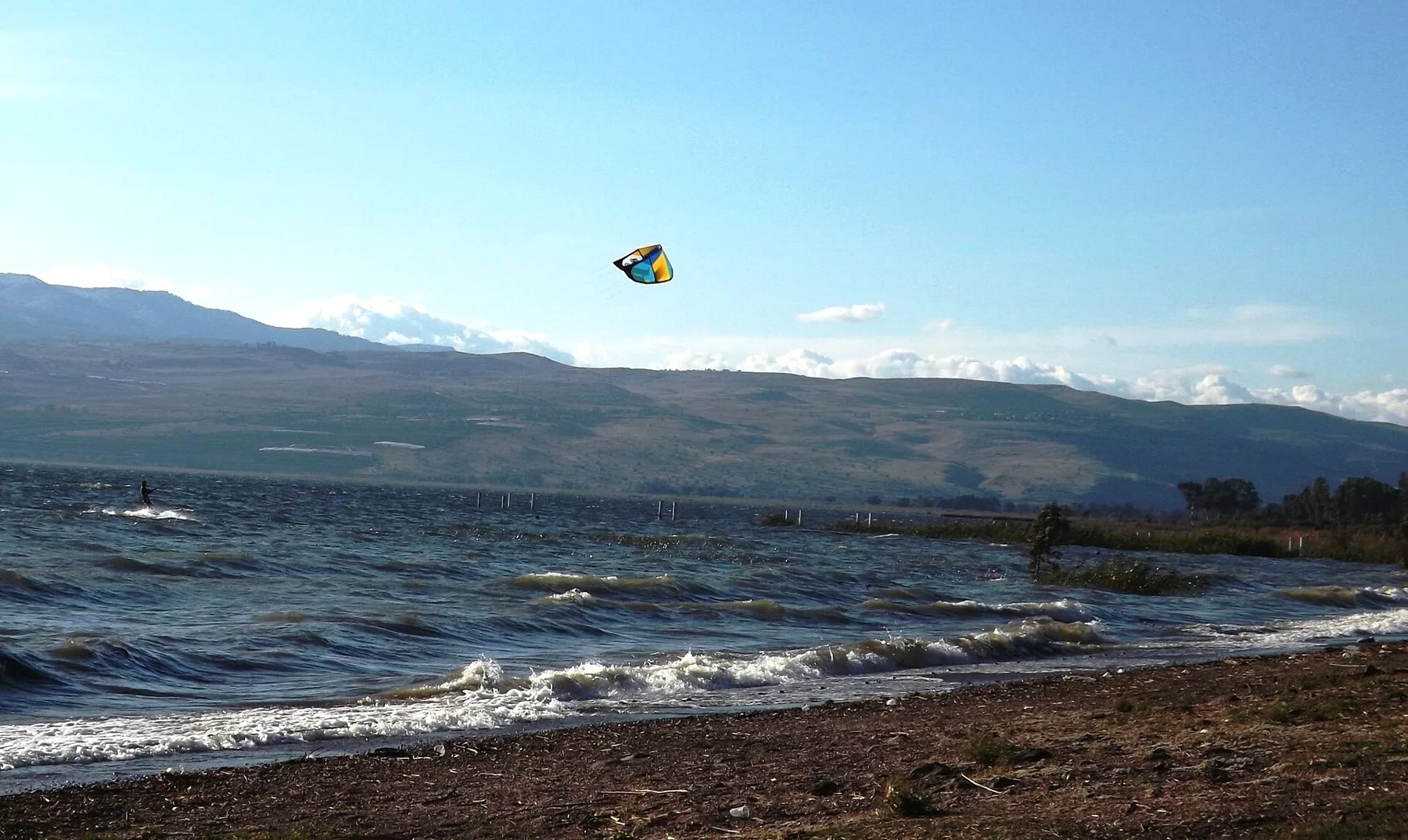
The short version
- Kite Beach, Cabarete Bay and Encuentro are different places.
- A wind-day count needs a threshold before it means anything useful.
- Ocean teaching needs a real local assessment, not an all-level label.
Cabarete makes sense if you like the idea of a beach town around your sessions. You can build a holiday around wind sports without spending every evening inside a remote camp. The practical choice is how close you want to be to your teaching or riding area, and how much town activity you want outside the door.
Do not book from the word “Cabarete” alone. The destination includes different beaches and different kinds of water use. A lesson on Kite Beach, a meal beside Cabarete Bay and a surf outing at Encuentro are separate parts of the trip.
Get the beach names straight
The Dominican Republic tourism office places Kite Beach on the western part of Playa Cabarete. Its 2026 destination campaign also distinguishes Encuentro, Kite Beach and Cabarete Bay. That geography is more useful than describing the entire coast as one beginner-friendly sports beach.
| Area | Why it matters to the plan | What not to assume |
|---|---|---|
| Kite Beach | A specifically kite-associated part of the coast | That every section is appropriate for every rider or lesson |
| Cabarete Bay | A separate base and beach-life choice | That beachfront accommodation gives direct access to the lesson you booked |
| Encuentro | A distinct surf-associated beach | That surf suitability establishes a kite launch or teaching area |
The point is not to rank the beaches. It is to stop unlike environments being merged into one booking promise. Ask for the exact school meeting point and an explanation of the area used at your level.
Decide what your holiday is mainly about
For a focused learning trip, easy access to the school and a flexible lesson schedule may be more useful than being beside evening activity. For an independent riding holiday, storage and the route between accommodation and launch become important. For a mixed group, consider noise, meals and how non-riders get around.
Map the ordinary routine before paying: carrying or storing equipment, reaching the centre, returning after the session and going out later. Check current local transport rather than assuming a short map distance is always a comfortable walk with a board bag.
Beachfront does not always mean quiet, and quiet does not always mean convenient. Ask accommodation providers concrete questions about the room location and late evening noise if that affects your sleep. Photos cannot answer this reliably.
Wind seasons: what a statistic can and cannot say
Cabarete Kite Point’s wind-season description uses a ten-knot threshold in an annual wind-day claim. That threshold matters. It cannot be translated into the same number of good sessions for a learner, a twintip freerider and a foil racer.
For a wind-focused shortlist, Cabarete Kite Point specifically identifies June through August as its more consistent thermal-wind crowd season; the same page’s summary extends peak planning into September. It separately identifies December through March as the busier general tourist season. Keep that distinction: visitor popularity and wind planning are not the same calendar. These are the provider’s descriptions, not a measured guarantee of your lesson conditions. A monthly wind-day total does not establish shorebreak, local exposure or suitability.
Choose dates with the school and the purpose of the trip in mind. If a particular water environment is essential, ask how often the provider relocates or cancels and how unused instruction is handled. Allow flexibility across several days instead of depending on one afternoon.
There is no universal Cabarete kite size. Rider weight, equipment, actual wind, skill and sea state all affect the choice. Use a current local assessment and appropriately matched equipment rather than copying an old traveller’s packing list.
Learning in an ocean environment
A tourism invitation to learn year round is not proof that the shorebreak and sea state will suit a novice on every day. Your school should be able to explain where it teaches the first stages, how the instructor supervises and how a student or lost board is recovered.
Compare student-to-instructor and student-to-kite ratios, not just hours sold. Ask whether the first block includes theory, land work and water time, and how the format adapts to the group’s abilities. Describe your swimming confidence and any previous lessons accurately.
For a returning independent rider, a local orientation can be a sensible first session. Establish boundaries, other water users, exits and the support available. Do not infer a right-of-way rule or an authorised area from the busiest patch of water.
Wave or reef objectives need additional assessment. Comfortable cruising on flat water does not establish competence around waves. If that is the reason for travelling, book coaching that matches the environment rather than adding it spontaneously after watching a highlight film.
Choose the arrival airport deliberately
The Dominican Republic tourism authority identifies Gregorio Luperón International Airport, Puerto Plata, code POP, as a gateway near Cabarete. The country has several international airports, and they are not interchangeable for a north-coast stay. Compare the full road transfer before choosing a cheaper fare into a distant resort region.
Book the arrival transfer to the actual property and mention sports luggage. For a week devoted to lessons or riding, one Cabarete base is simpler than combining repeated long transfers. A longer trip can include another region, but treat that as a separate itinerary rather than assuming every part of the island is a casual day trip.
Compare the whole trip cost
Request a dated total for accommodation, transfers, lessons or rental, storage and any beach or support service. Add food, local transport and airline baggage. If travelling as a couple or group, separate shared room or transfer costs from individual lesson and equipment costs.
Check damage exposure and deposits, then ask what the booking does when weather interrupts. A no-wind credit is useful only if you can actually return to use it. The same applies to equipment rental that cannot be moved to another day.
Keep insurance and entry requirements outside a school’s sales reassurance. Confirm the activity, location, medical and repatriation terms with your own provider and the relevant authorities.
A useful week does not need a different beach every day
For a learner, make the first suitable session an assessment and allow the instructor to organise progression around conditions. Leave space between lessons for rest and normal holiday time. For an independent rider, settle into one assessed base before exploring alternatives.
Use non-riding days for the town or other suitable activities. A surf lesson at a separate beach is a different booking with its own conditions and instruction needs. Do not treat it as automatically included in a kite package.
Cabarete is a good candidate when you want wind sports and an active beach-town setting in the same trip. A remote, quiet lagoon camp may be a better fit if your priority is standing-depth teaching and minimal daily distraction. Choose around the holiday you actually want to have.
Something changed?
Conditions, access and prices change. If something needs updating or correcting, tell us. Get in touch ↗